SaliCrop is an Israeli agtech company based in Kfar Vitkin that has developed a non-GMO seed enhancement technology. Seeds are treated before planting so they are ready for heat, salinity and drought, and the plant switches this response on only when climate stress hits. The technology works with existing varieties of tomatoes, onions, peppers, alfalfa and rice, and has been tested in more than 250 projects across 12 countries.
We worked with Carmit, the company's CEO. SaliCrop came to us with an existing brand and a website that worked but no longer reflected the company: it did not impress, it was out of date, and it was hard to edit. The project covered UX strategy and Webflow development as one continuous process.

The new website came at an important moment for the company. SaliCrop was in talks with some of the largest players in the global seed market, and the website was part of how it presented itself to them and to the market as a whole. The goal was that anyone who visits, from a technology lead at a multinational seed company to an investor, meets a confident company that is commercially active with partners in many countries and growing at its own pace.
In the strategy phase we combined the brief Carmit wrote with our own research and defined three audiences:
All three ask the same question: does it work today? Many companies in this field talk about future potential, so we decided SaliCrop's website would speak about the here and now: proven, non-GMO technology that works with the varieties a customer already grows and delivers results within two seasons, compared with around ten years to breed a new variety.
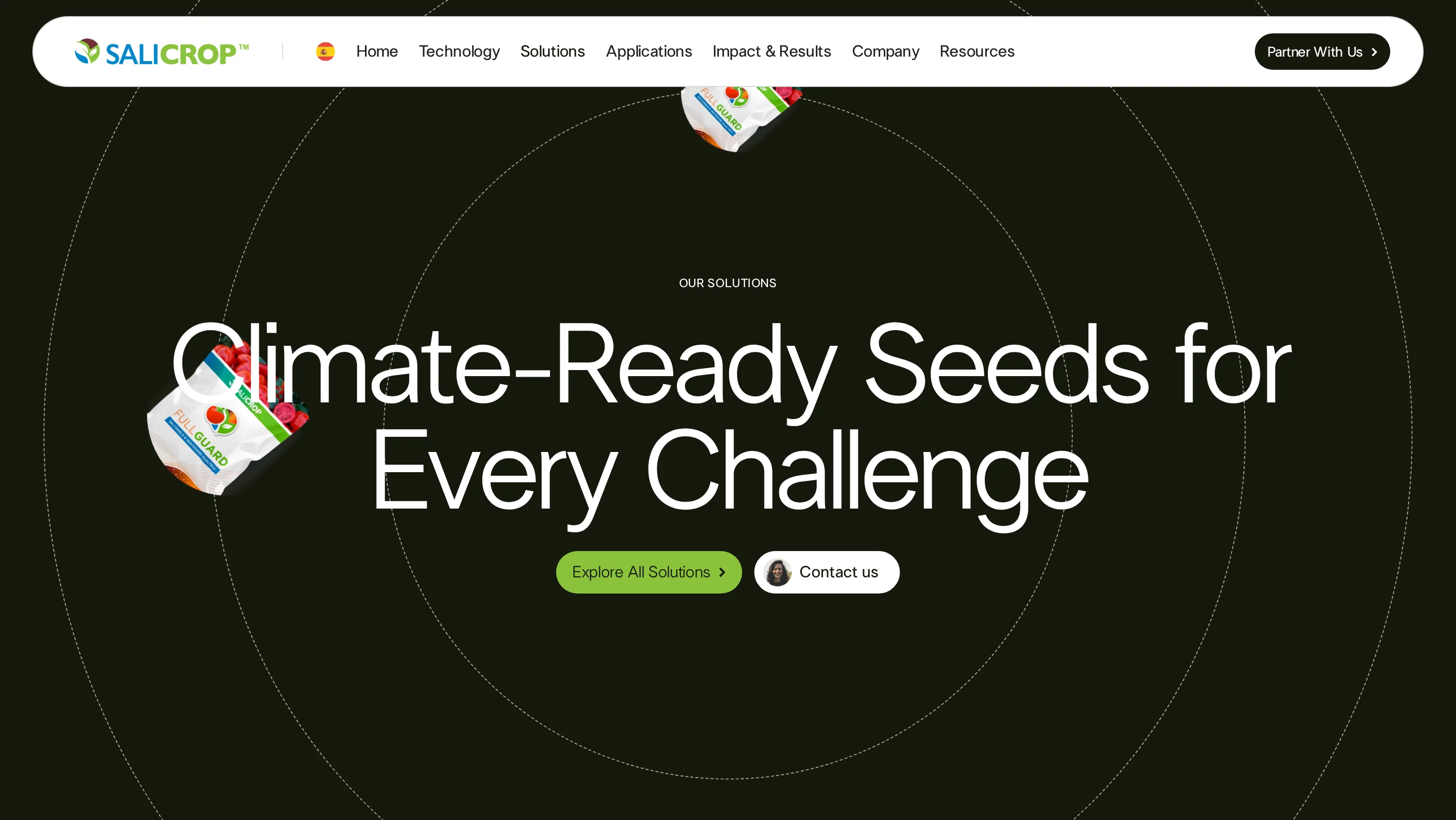
SaliCrop works in agriculture that is facing climate change, so the website's visual language leans on the landscape itself: fields from above, cracked soil next to green crops, and only a few animations. Scrolling stays clean and leaves the stage to the imagery. We built on a Webflow template from the agriculture and sustainability space and fully adapted it to the brand, the content and the structure defined in the strategy phase.
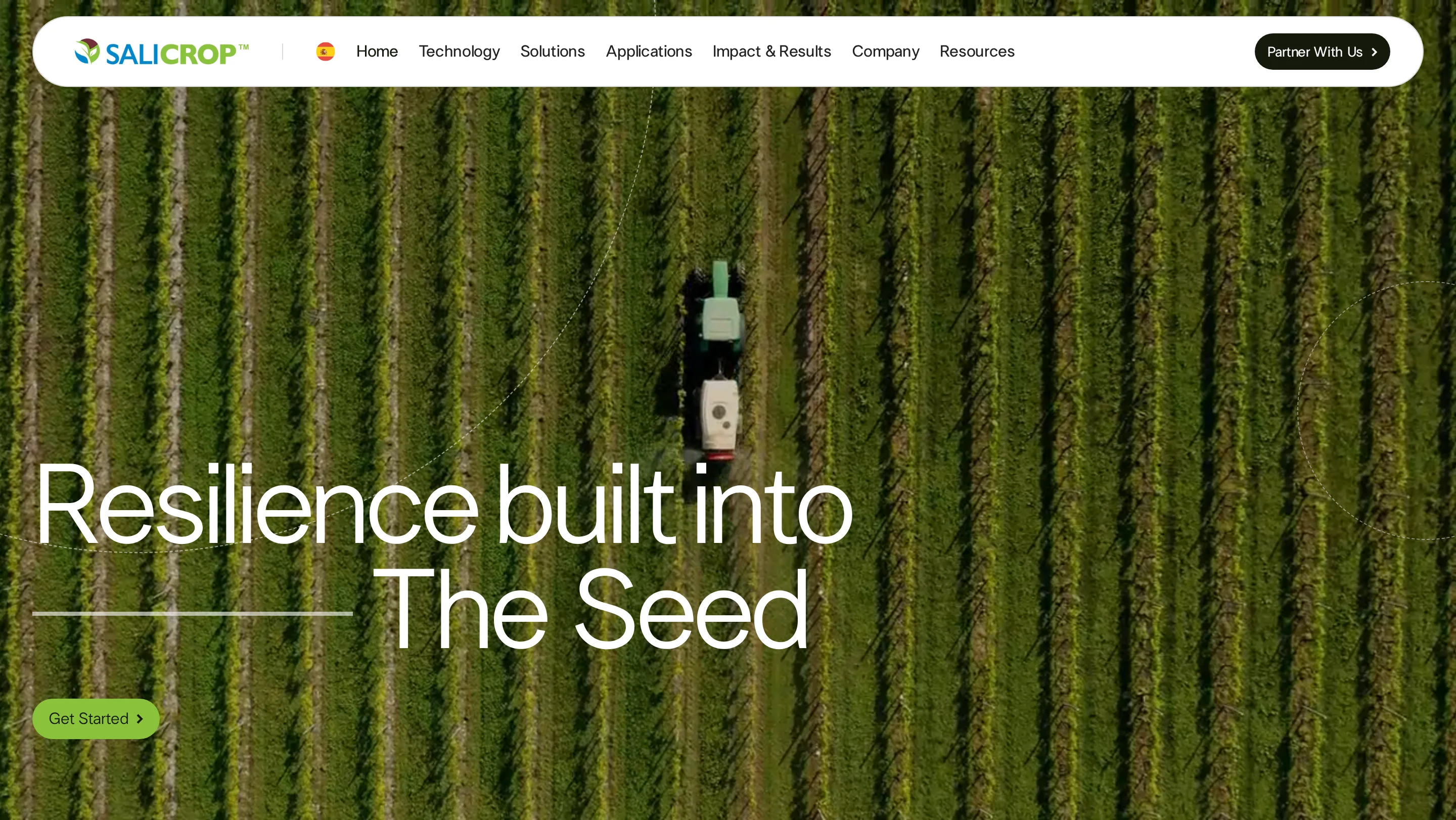
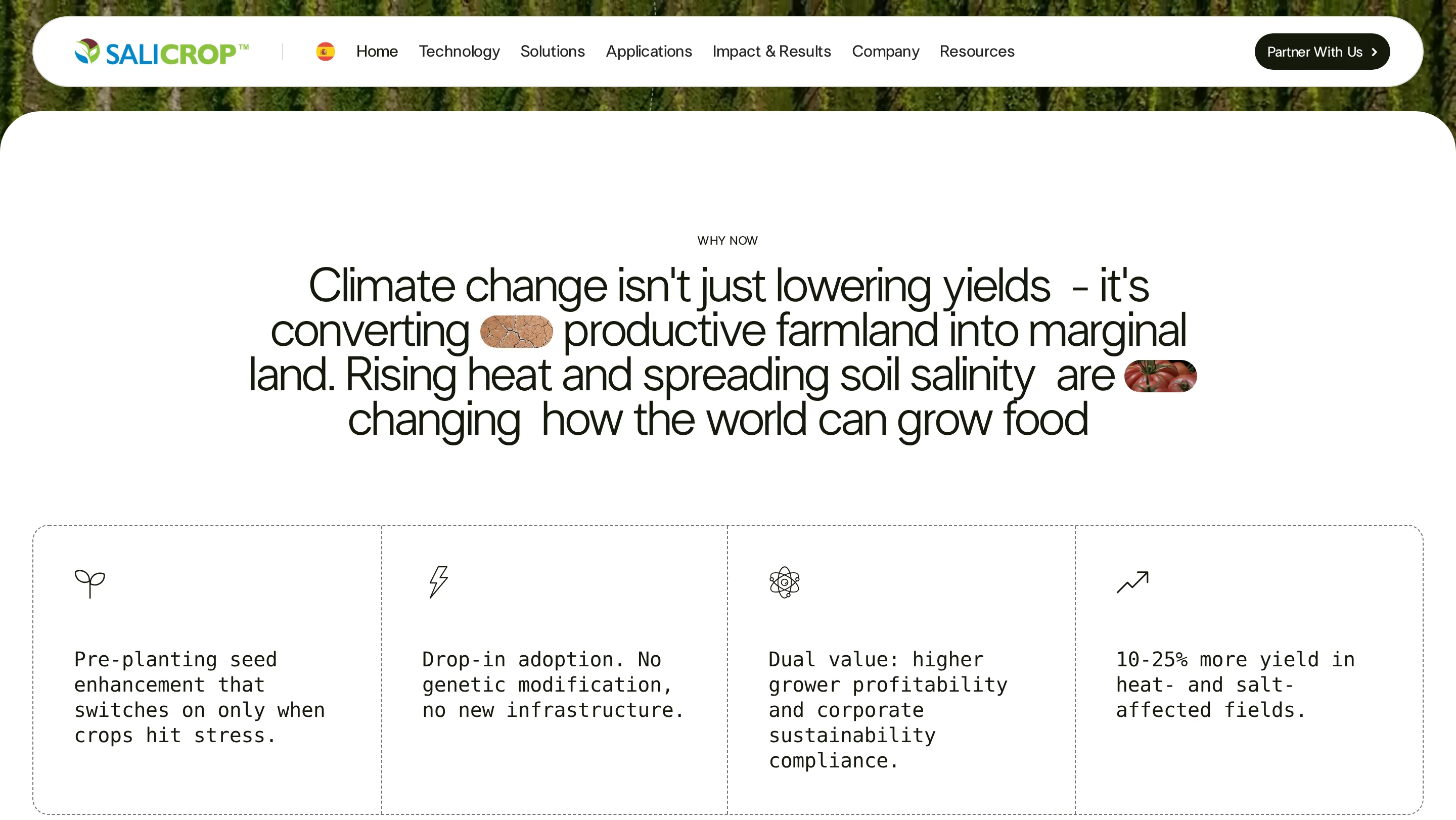
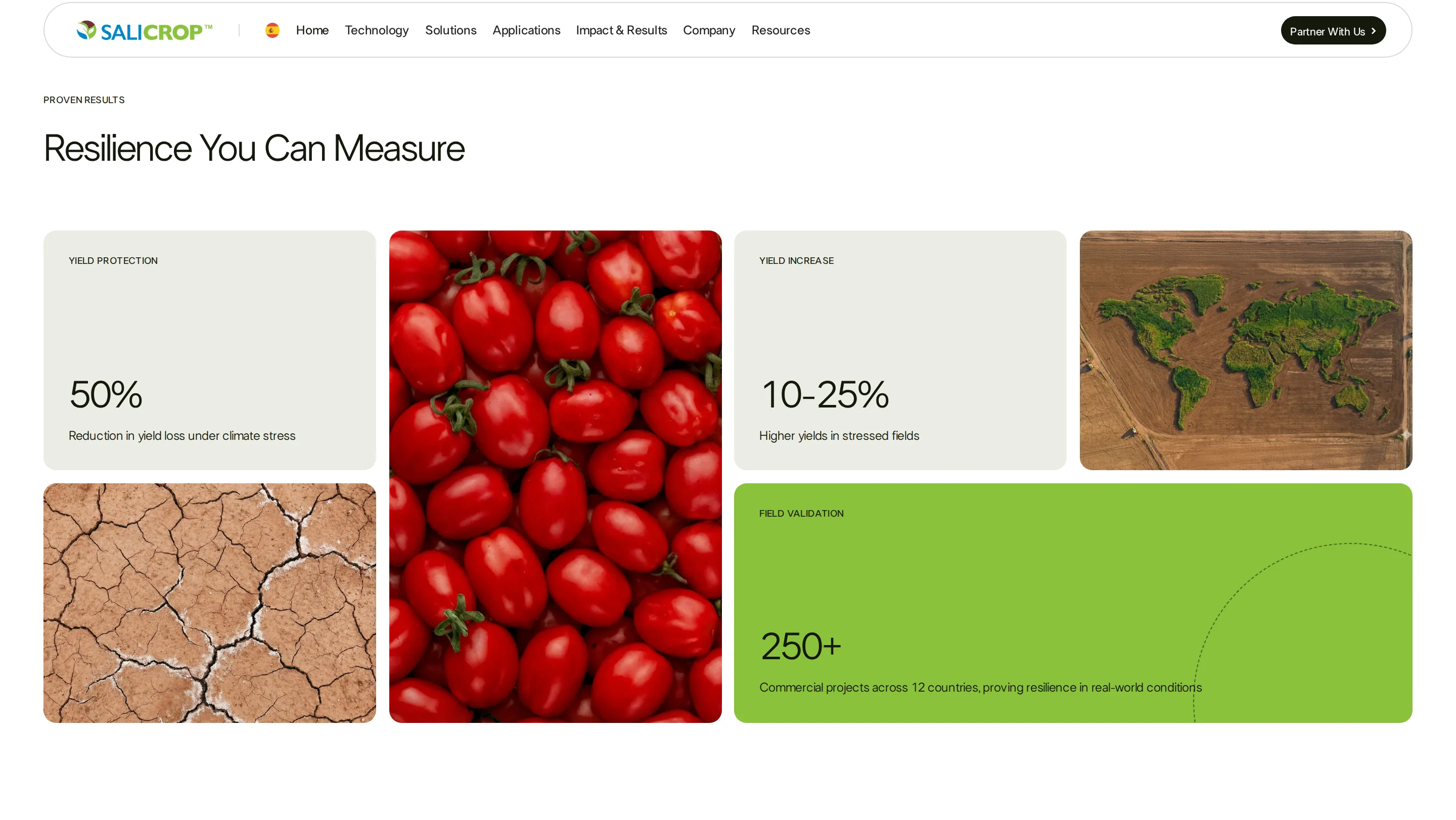
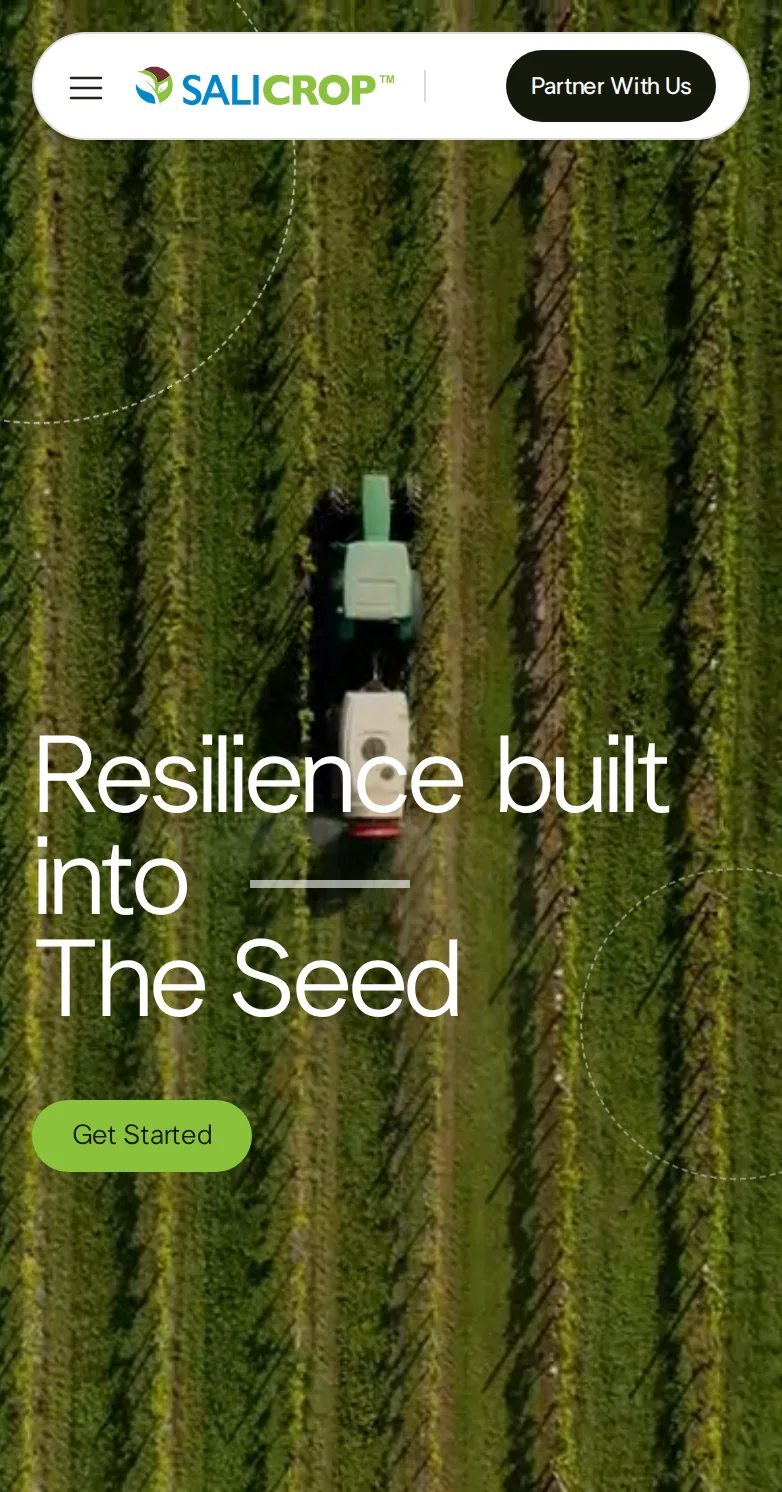
The homepage opens on drone footage of a tractor moving between crop rows, with the headline Resilience built into The Seed. As you scroll, a white panel rises over the video with the Why Now section, where small images of cracked soil and tomatoes sit inside the sentence itself. The results section, Resilience You Can Measure, shows the data as a grid of tiles: up to 50% less yield loss under climate stress, 10-25% higher yields in heat- and salt-affected fields, and more than 250 projects in 12 countries.
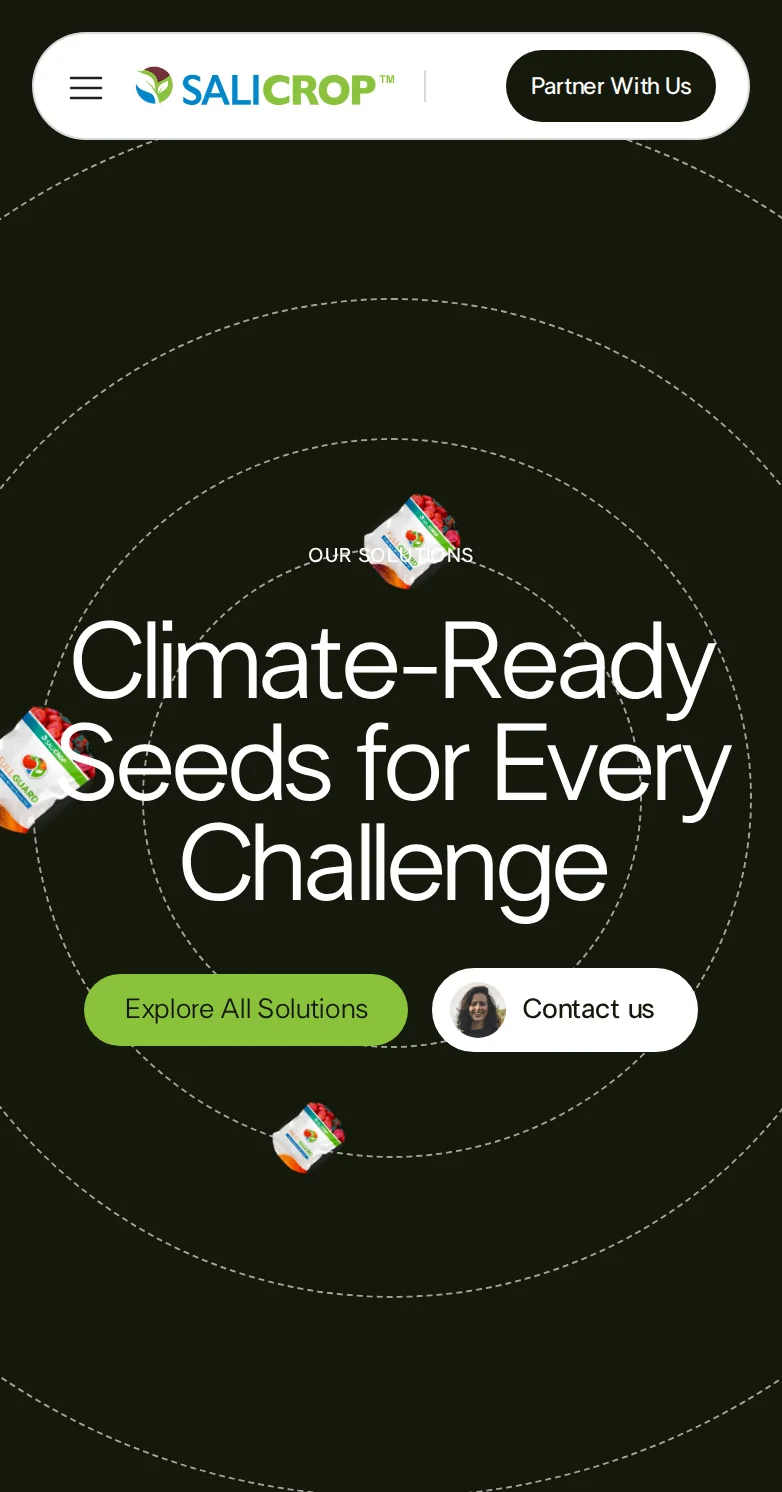
On the solutions page, product packs orbit the headline Climate-Ready Seeds for Every Challenge, and below it six products are presented: three SALIPRIME products for peppers, tomatoes and lettuce, plus FullGuard, HeatGuard and SaltGuard for stress resilience.
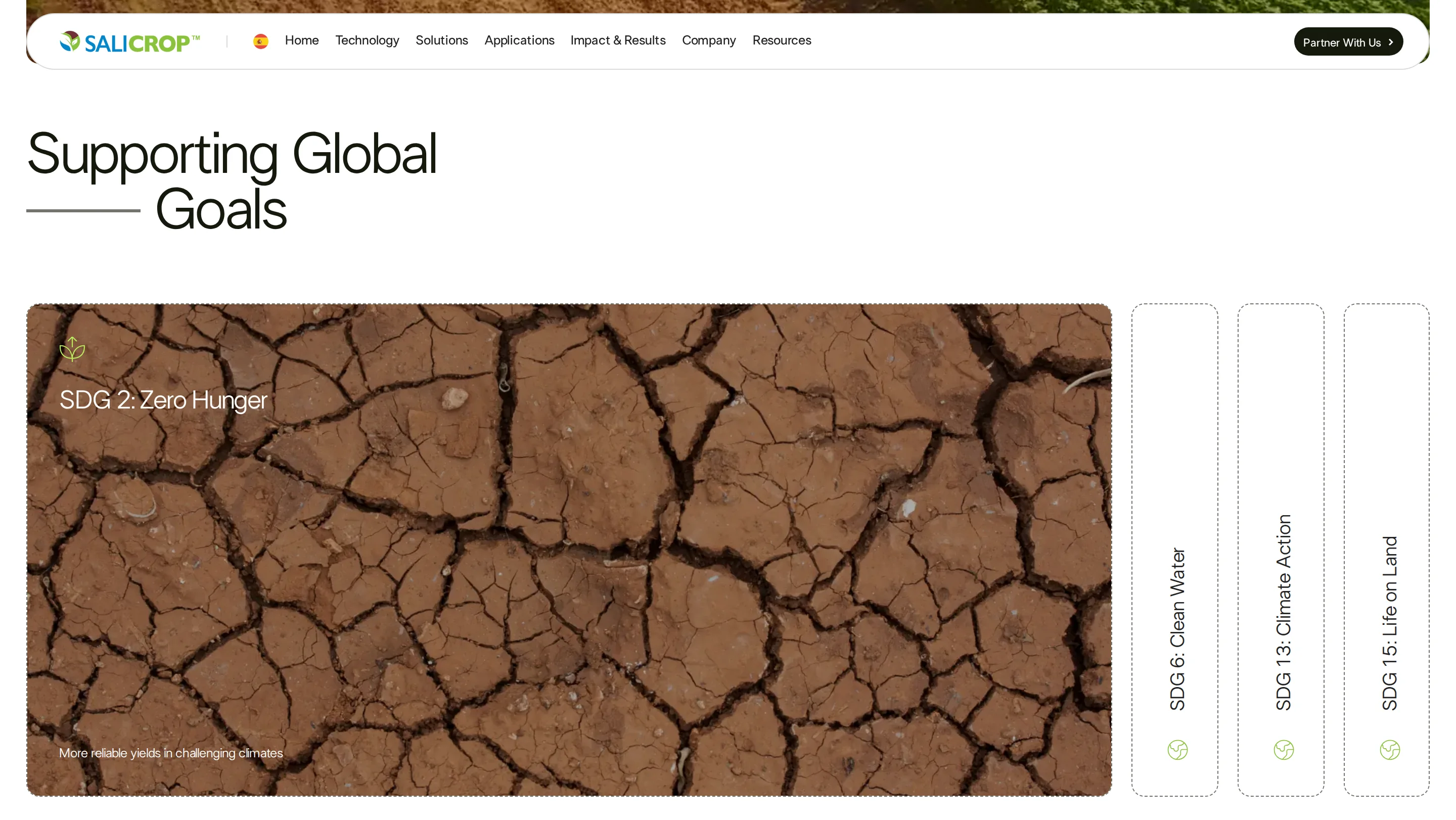
The impact page, Producing More From the Land We Already Farm, connects the technology to the UN Sustainable Development Goals. Four tabs, SDG 2, 6, 13 and 15, open into a full image explaining how SaliCrop contributes to each goal. This page speaks directly to sustainability managers at seed companies and processors, who need to report on impact and not only on output.
On the old website every change was complicated. Today Carmit updates content, articles and field results herself in the Webflow CMS, and throughout the project we supported her until it became a natural part of her work. The articles section features trials and commercial deployments from Spain, Portugal, Argentina and other countries.
SaliCrop's website launched in English at salicrop.com. After launch, as part of our support hour bank, we added a full Spanish version, articles included, to speak directly to markets in Spain and Latin America.
SaliCrop joins our work in science and technology, alongside Canopy, a biotech company whose website was also built for a small, professional audience of decision makers.
This project shows why we work Blueprint First: when the website is part of a company's business strategy, the strategy phase decides not only what goes on it, but also what message it sends to the market.


.svg)